Common Backstage Mistakes New Performers Make (and How to Fix Them)
The first time you stand in the wings waiting for a cue, everything you rehearsed feels strangely far away. The set looks different from the side. The floor is covered in tape marks that mean nothing to you yet. Someone in blacks brushes past carrying a chair, and a voice you don't quite recognise whispers your name. Learning to perform is one skill. Learning to behave backstage is another, and most new performers are taught the first while being left to guess at the second. The encouraging part is that the mistakes are nearly always the same ones, and almost all of them can be fixed with a small change of habit.
Treating the wings like a green room
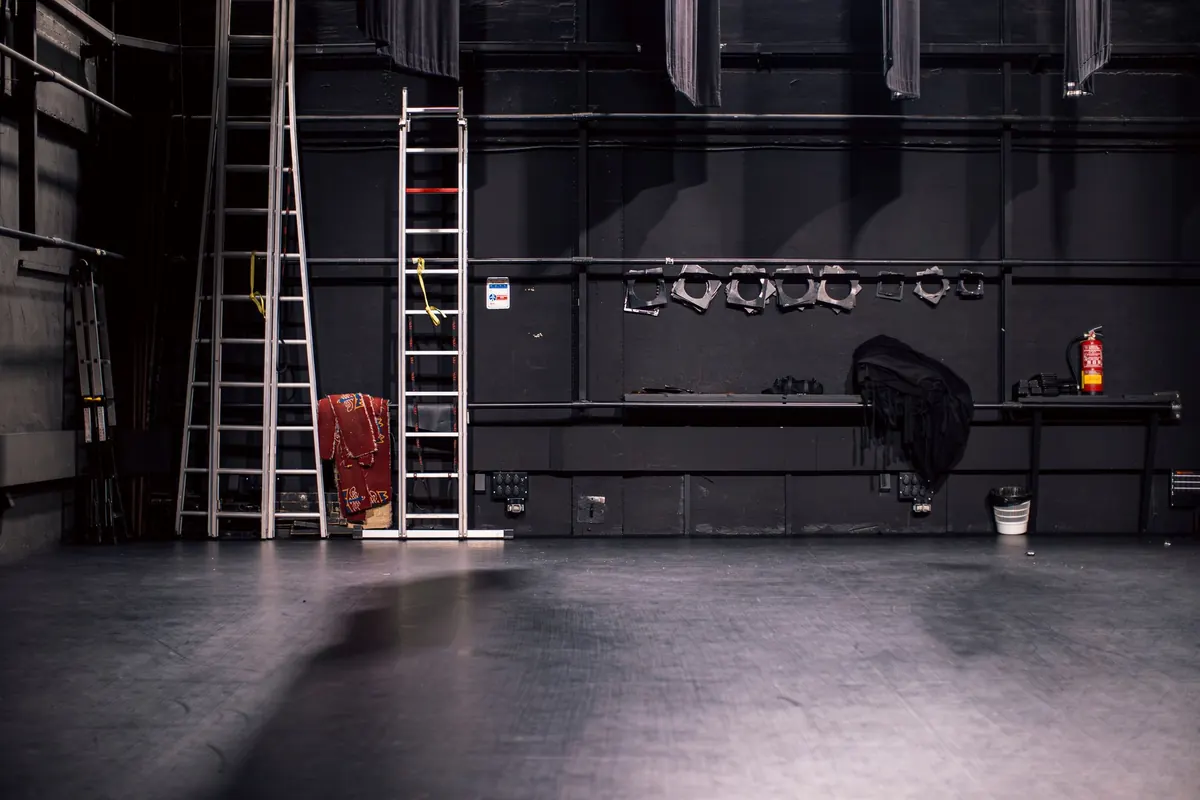
It happens on nearly every first production. A bag gets parked in the quick-change corner "just for a minute". A water bottle lands on the prop table. A coat is draped over a rail that happens to carry a microphone cable. None of it feels like a big deal until the middle of act two, when someone needs to cross in the dark with a tray of glasses and there is a rucksack where their foot should be.
The wings are a workplace, not a waiting area. They are narrow, badly lit, and full of people moving fast with things in their hands. Anything you put down there is a hazard, and anything you leave there is something a stage manager will eventually have to pick up for you.
- Keep your bag in the dressing room, zipped, under your chair or in a cubby.
- Use the marked prop table for props and nothing else — not your phone, not your script, not your coffee.
- Take your water bottle with you when you leave the wing, or label it and keep it in a fixed spot away from the traffic path.
- If you need a personal station for a quick change, ask the stage manager where it can go rather than claiming a corner.
One habit covers most of this: arrive early enough to put your things away properly before the half. Rushing in ten minutes before curtain is what produces clutter.
Listening for the wrong cue
New performers often learn a cue as a chunk of text. "I go on after the line about the letter." That works in the rehearsal room, where nothing changes. In performance, an actor pauses, a laugh runs long, a sound cue lands a second late, and the line you were relying on arrives somewhere else entirely. Then you are either late or you go early and walk into a scene that hasn't finished.
Ask, in the technical rehearsal, what the actual cue is. It might be a light change, a sound effect, a stage manager's call, or a specific move from another actor. Write it in pencil in your script. If the cue is a line, note which line — the exact one, not the general area.
Three habits make a real difference here. First, listen to the show from the wings at least once during tech so you know what your entrance sounds like from the outside. Second, count your cues from a fixed point rather than from memory of rehearsal. Third, if you are unsure whether you missed something, tell the stage manager at the interval instead of hoping nobody noticed. They would far rather know.
Assuming everyone already knows
Most backstage disasters are quiet communication failures rather than dramatic ones. You assume the prop has been set. The stage manager assumes you know the entrance moved two feet upstage. Nobody says anything, because everyone is being polite and busy.
Say the small things out loud. If you are not certain where your prop lives, ask before the half, not during the scene. If a costume piece has a fastening that keeps failing, report it at notes rather than improvising a safety pin thirty seconds before you walk on. If you feel unwell, tell someone early — a stage manager can work around a sick performer at six o'clock far more easily than at eight twenty-five.
The same applies to information coming the other way. Read the daily call sheet and the notes. Sign in where you are asked to sign in. Confirm the change even if you think you already know it. Nobody backstage has ever been annoyed by a performer who double-checked a prop.
Getting in the crew's way
Crew move with purpose and often in the dark. If you are standing in a crossover, chatting in a doorway, or drifting across the back of the stage during a scene change, you are not just visible — you are an obstacle. The safe rule in the wings is to walk behind people, not in front of them, and to keep to the side of the route rather than the middle.
Resist the urge to help. Do not move a prop table, adjust a flat, or carry a set piece "because it was in the way". Those objects are where they are for a reason, and a well-meant adjustment can throw off an entrance that was timed to the inch. If something genuinely looks unsafe, find a stage manager or the technical crew and tell them rather than fixing it yourself.
Quick changes deserve their own rehearsal
A quick change is a small piece of choreography with no room for improvisation. Lay your costume out in the order it goes on, fastened open, with shoes underneath. Know which dresser is on your left. Keep your hands out of the way so they can work. Practise it at least twice before the first performance, in the actual space, wearing the actual clothes. New performers usually lose time to bracelets, laces, and hairpieces — so rehearse those specifically.
Sabotaging yourself before you go on
Backstage habits are physical as well as organisational. A phone left on vibrate in a dressing room can be heard through a wall in a quiet moment. Eating in costume is a fast route to a note from wardrobe. Doing a full vocal warm-up in the wing, where the audience can hear it, is a fast route to a note from the sound designer.
Warm up properly, and do it somewhere out of earshot. Keep water to hand and drink before the show rather than during a scene. Put the phone on silent and leave it in your bag. If you need to eat between a matinee and an evening show, eat something light and change out of the costume first.
Not writing anything down
Notes sessions produce a stream of small instructions — a move shifted, a line clarified, a prop handled differently — and even the most attentive performer will not retain all of them. Keep a pencil and a folded page taped inside your script. Write the note down in the moment, in whatever shorthand makes sense to you, and check the page before the next performance.
Do the same with the geography of the building. Before the first show, find the stage manager's desk, the nearest fire exit, the route from the dressing room to your entrance, and the quickest way to the toilet that does not cross the stage. Two minutes of walking around saves a great deal of panic later.
A five-minute pre-show routine
Most of the fixes above become automatic once they live inside a routine. Try this before every performance, and adjust it as you learn the show:
- Put your bag away and lay out anything you need for the first entrance.
- Check your props are set and your costume is fastened, complete and comfortable.
- Read your notes page and your cues.
- Phone on silent, in the bag, out of the way.
- Warm up, quietly, somewhere that isn't the wing.
- Tell the stage manager you are ready, and mean it.
None of this is glamorous, and none of it will be noticed when it goes well. That is the point. Good backstage habits are invisible: they simply leave you free to walk on stage knowing exactly where you are supposed to be, and when.
Photo: Martin de Arriba / Pexels

You Might Also Like
Opera, musicals and straight drama share a stage but ask different things of an audience. A practical guide to spotting the differences before you book a ticket.
A practical guide to Italian audience customs — when to clap at the opera, how to shout bravo correctly, why booing is a tradition, and how to handle the curtain call.