Technical Rehearsal Explained: What Actors, Crew, and Audience Should Expect
Somewhere between the last run-through in the rehearsal room and the first night with an audience, there is a day that looks nothing like acting. The house lights are at half. The stage manager's voice comes over the god mic — calm, a little tinny — and asks for quiet, please. Someone in black is up a ladder. Nobody is performing, exactly, and yet everything about the production is being decided. That day is the technical rehearsal, and it has its own rules, its own tempo, and its own small triumphs.
If you are an actor walking into your first one, a crew member joining a new company, or a curious friend who has been told you cannot come and watch, here is what actually happens in the room.
What a Technical Rehearsal Is, and What It Isn't
A tech rehearsal exists to join two things that have been built separately: the performance and the machinery around it. Lights, sound, scenery, costumes, props, quick changes, entrances from under the stage or through the auditorium — all of it gets fitted to the acting for the first time.
The emphasis is on precision, not polish. Nobody expects a beautiful run. They expect a correct one. A cue that lands half a beat late in tech and gets fixed is worth more than a cue that happened to look fine by accident.
It helps to know the family of rehearsals around it. Depending on the company and the scale of the show, you may hear about:
- Paper tech — a sit-down meeting where the stage manager, designers and director talk through every cue on paper before anyone touches a lighting desk.
- Dry tech — the crew works through cues and scene changes without the actors.
- Cue-to-cue — actors skip to the moments where something technical happens, so the cues can be set. In smaller productions this is often folded into the main tech.
- Tech rehearsal — a full run with all technical elements in place, stopping as needed.
- Dress rehearsal — a full run in costume, usually without stops, as close to performance conditions as the company can make it.
The Pace: Slow, Repetitive, and Deliberately So
A scene that plays in four minutes can easily take forty. This is the single hardest thing for newcomers to accept.
The run will stop. It will stop because a lighting cue needs to move two seconds earlier, because a door needs to close more quietly, because an actor's entrance from stage left cannot be seen once the practical lamp on the table is switched on. It will stop because a piece of scenery is heavier than anyone remembered.
Between those stops comes waiting. Long stretches of it. Someone may ask you to hold a position onstage while a focus session finishes, and then ask you to do it again — same position, same line, different lighting state. This is not inefficiency. It is the only way to see how a moment behaves under real conditions.
Actors sometimes call it "hurry up and wait," and that is fair. Come ready to be quick when you are needed and patient when you are not.
What Actors Should Expect
Your job in tech is smaller and stranger than your job in performance: be precise, be available, and be consistent. Technique gets layered around you, and if your timing drifts from run to run, the cues built around you will drift too.
A few practical habits make the day much easier:
- Bring a pencil. Write your cues, your quick-change points, and any note about a prop or a walk in your script. You will not remember them at eleven at night.
- Know the words cold. Tech is not the place to be searching for a line. Every pause caused by uncertainty costs the whole room time.
- Wear what you will wear onstage, or something close — particularly shoes. Heels, boots, and long coats change how you move and how you sound.
- Stay in the building and stay findable. Do not wander off to a café. The moment you leave is the moment the stage manager needs you.
- Protect your voice. You will speak the same eight lines many times over several hours. Keep water nearby, avoid shouting across the auditorium, and speak at performance level only when asked.
- Ask at the right time. If a question affects blocking or safety, ask immediately. If it is a note about your performance, save it for the director afterwards.
What the Crew Is Doing While You Wait
From the stage it can look as though nothing is happening. In fact the room is full of parallel work.
The lighting team is chasing levels and focus, deciding how much light lands on a face and how much spills onto the backcloth. Sound is balancing radio mics and setting the volume of a doorbell that, from the audience, must sound like it is in the next room. The stage crew is timing scene changes, checking that a rail will fly smoothly and that nothing creaks during a quiet monologue. Wardrobe is timing quick changes to the second. The stage manager is writing all of it down and calling it back so that it can be repeated exactly, night after night.
If a crew member asks you to stand on a spike mark, do it and stay still. If they ask you to say a line while a desk is being adjusted, say it at full volume. You are the measuring instrument for the morning.
For the Curious Audience Member
Most technical rehearsals are closed, and not out of mystery. The work is unpolished and often half-dressed; the room is dangerous, with ladders, cables, and moving scenery; and the actors need to be able to fail without an audience watching. Some companies do hold open techs or invited previews. If you are offered one, go — but go knowing what you are seeing.
You will not see a show. You will see the making of one. Expect repeated scenes, expect the same twelve seconds of music played six times, expect a stage manager's voice breaking into the middle of a monologue. For anyone curious about how theatre is built, it is more revealing than a finished performance, and far more interesting than it sounds.
The Language You Will Hear
Tech has a shorthand. It is not meant to exclude you, and it is perfectly acceptable to ask for a definition.
- Standby — a warning that a cue is about to be called.
- Go — execute that cue now.
- Hold — stop everything, do not proceed.
- Places — everyone to their starting position.
- Spike — a mark on the floor showing where a piece of scenery or a person belongs.
- Clear the deck — everyone offstage, out of the way.
Getting Through a Tech Day Well
Eat a proper meal before you arrive, because the schedule will not necessarily include a sensible break. Bring water, a pencil, a hoodie for the cold stretches, and something to occupy you quietly in the wings. Expect a slow middle of the day and a sudden rush at the end.
Say thank you to the crew. They have been in the building longer than you, they will be there after you leave, and they are the reason your entrance from the wings will be lit and your microphone will not squeal. Tech rehearsals rarely feel rewarding while they are happening. They feel rewarding on opening night, when nobody has to think about anything but the play.
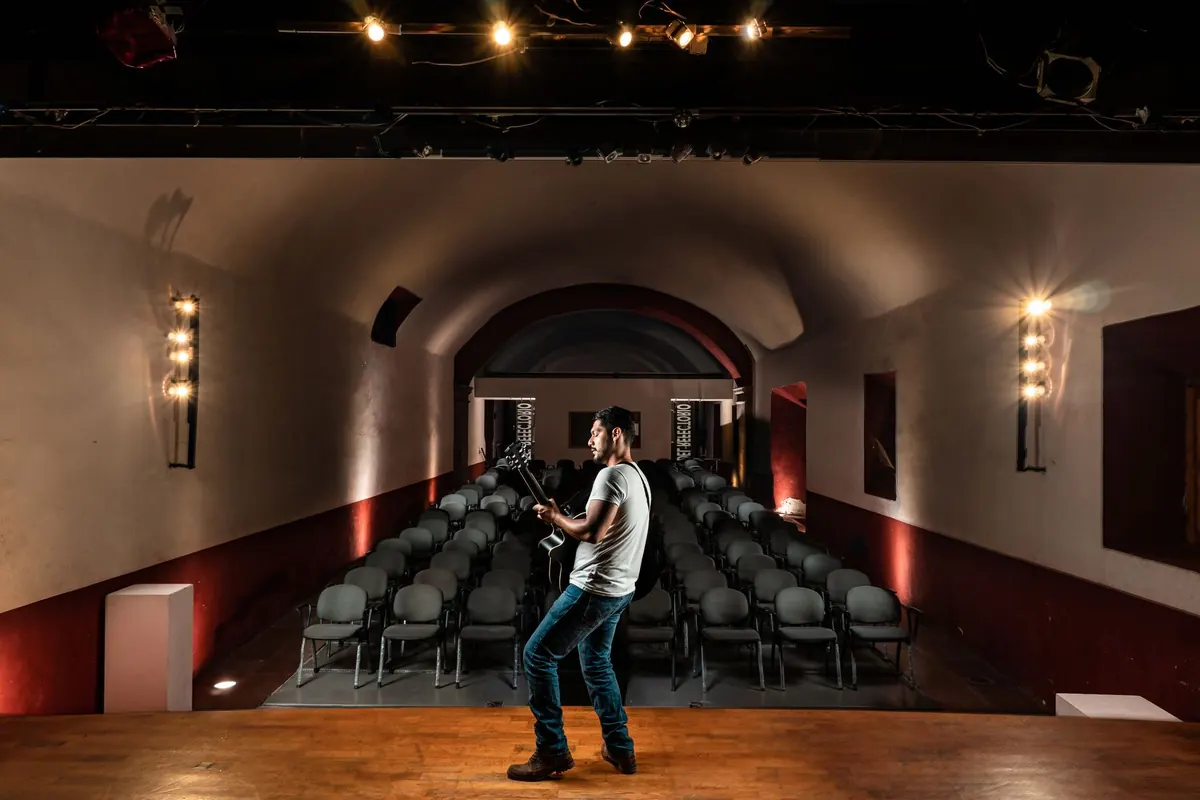
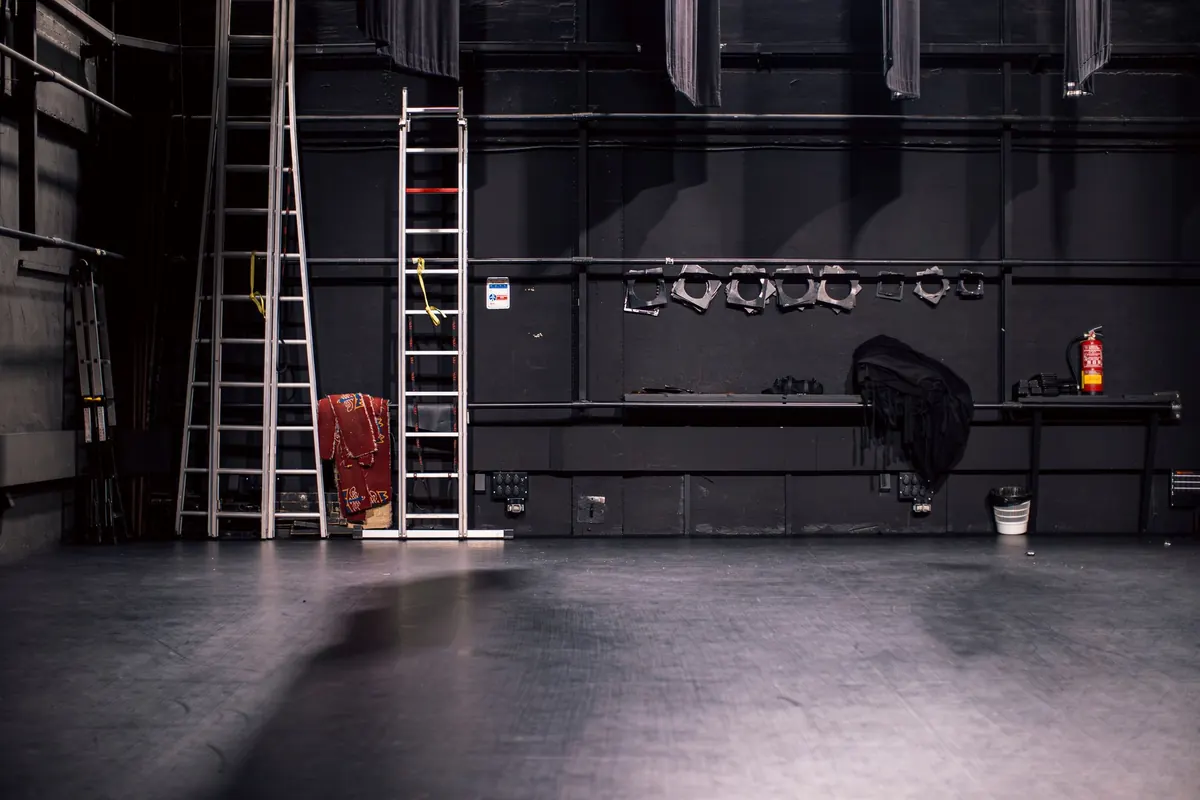
Photo: José Luis Reveles / Pexels

You Might Also Like
Opera, musicals and straight drama share a stage but ask different things of an audience. A practical guide to spotting the differences before you book a ticket.
A practical guide to Italian audience customs — when to clap at the opera, how to shout bravo correctly, why booing is a tradition, and how to handle the curtain call.