Drama, Musical, and Opera Explained: A Beginner’s Comparison for New Theatergoers
You have bought the ticket. The usher walks you down the aisle, the lights dim, and a dozen small questions arrive at once. Will there be surtitles? Do I clap now? Why is that man singing a line he could perfectly well say? Drama, musical theatre and opera look like siblings from the outside — people on a stage, telling a story in a lit room — but each one makes a different bargain with its audience. Knowing which bargain you have signed up for is most of the work of enjoying the evening.
Three Forms, One Shared Bargain
A straight play trusts the spoken word. The script carries the evening, the actor's voice is the instrument, and in most small and mid-sized houses that voice arrives unamplified. Nothing is repeated for your benefit; if you miss a line, it is gone.
Musical theatre keeps the script but breaks it open with song and dance. The book scenes move the plot, and the songs arrive when a character can no longer contain what they feel in speech. Expect amplification, expect a band or an orchestra, expect the evening to be shaped like a series of peaks rather than a single rising line.
Opera sings the whole thing. The drama is carried by voices trained to ride over an orchestra in a pit, usually without microphones, often in a language you do not speak. That last point unsettles newcomers more than any other, and it is easily handled: most houses project a translation above the stage, and reading it becomes second nature within ten minutes.
How Each Form Uses the Voice
The clearest way to tell the three apart is to close your eyes and listen. In a play you will hear consonants, breath, hesitation, overlap — the texture of ordinary speech shaped into art. A good actor can make a whisper reach the back row of a small theatre, and the thrill comes from how close it feels.
In a musical you will hear a voice pushed through a microphone and a mixing desk. Singers switch between a conversational, speech-like delivery and a full-throated belt that lands on a specific note in the melody. The lyrics do the work the dialogue was doing, only tighter and in rhyme.
In opera the voice is the whole event. Singers are trained to project across an orchestra without amplification, which means a different relationship to words: vowels are stretched, consonants are sacrificed, and the line becomes a stream of sound. This is why newcomers often cannot follow the text even when it is in English. Listen for the shape of the melody first and let the surtitles carry the meaning — that is how the form is built to be heard.
Staging Conventions You Will Notice
Each form has habits that can look strange until you know what they are doing.
- The fourth wall. In naturalistic drama the actors behave as though nobody is watching. When a character suddenly speaks to the audience — the soliloquy in Shakespeare, the narrator in a memory play — it is a deliberate jolt, not an error.
- The scene change into song. In a musical, watch for the moment a scene stops behaving like a scene: the lights shift, the band enters, and the character steps out of the furniture. That transition is the form's signature move.
- The aria. In opera, the plot is pushed along by recitative, a flexible, speech-like singing. Then everything stops and a character tells you who they are. Rodolfo's account of his own poverty in La Bohème is not a conversation; it is a portrait, and the room knows to sit still for it.
- The dance break. Choreography in musicals is rarely decoration. It is usually the moment when a group's energy or a character's confidence becomes visible.
- The concept. Opera and musicals are frequently moved to another era by a director. A production set in the 1950s or on a bare white stage is an interpretation, not a mistake.
What the Audience Is Expected to Do
Applause is the biggest source of first-night anxiety, and the rules are simpler than they look. In a play, clap at the interval and at the curtain call, and hold it during the performance. In a musical, clapping after a big number is normal and the performers expect it. In opera, applause after a well-sung aria is standard, and shouting a single "bravo" at a man or "brava" at a woman is a compliment rather than an interruption — in Italian houses especially, it is part of the evening's texture.
Silence is not the same as seriousness. In all three forms, the audience is a participant: what you give back, in attention and in applause, changes the temperature of the room.
Beyond that, the etiquette is ordinary. Phones off and out of sight. No photography, even during the curtain call, unless the company has said otherwise. Unwrap sweets before the lights go down. Arrive early, because latecomers are usually held at the back until a suitable pause, and in opera that pause can be twenty minutes away.
Choosing Your First Show
If you are still deciding what to book, work backwards from what you already enjoy rather than from what you think you should see.
- You like dialogue, wit and characters who talk like people. Start with a contemporary play or a well-made classic in your own language. Nothing to decode, everything to watch.
- You want melody you already half know and a big, generous evening. Pick a canonical musical — the kind with songs that escaped the theatre decades ago. Familiarity is a feature, not a compromise.
- You want music to carry the drama and you do not mind reading. Choose a famous opera with a strong, simple story. La Traviata, Carmen and Tosca are popular for a reason: the plots are legible and the tunes do a lot of the work.
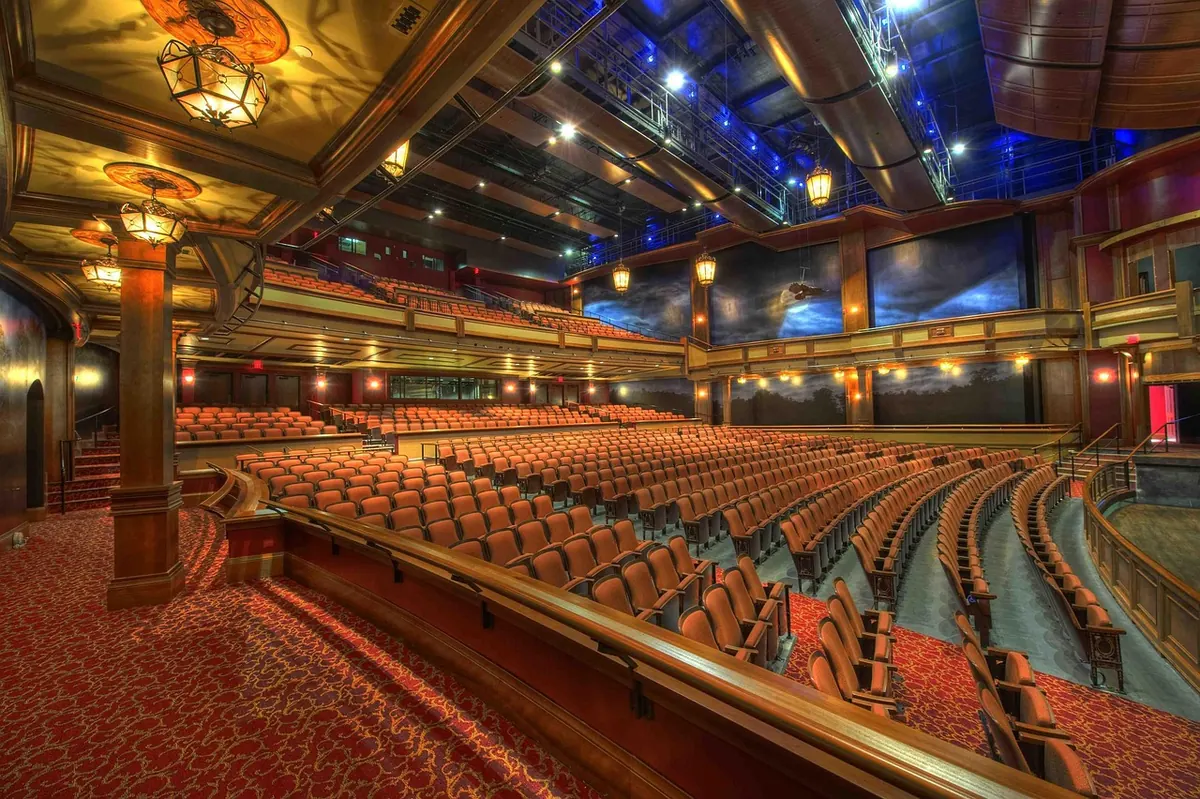
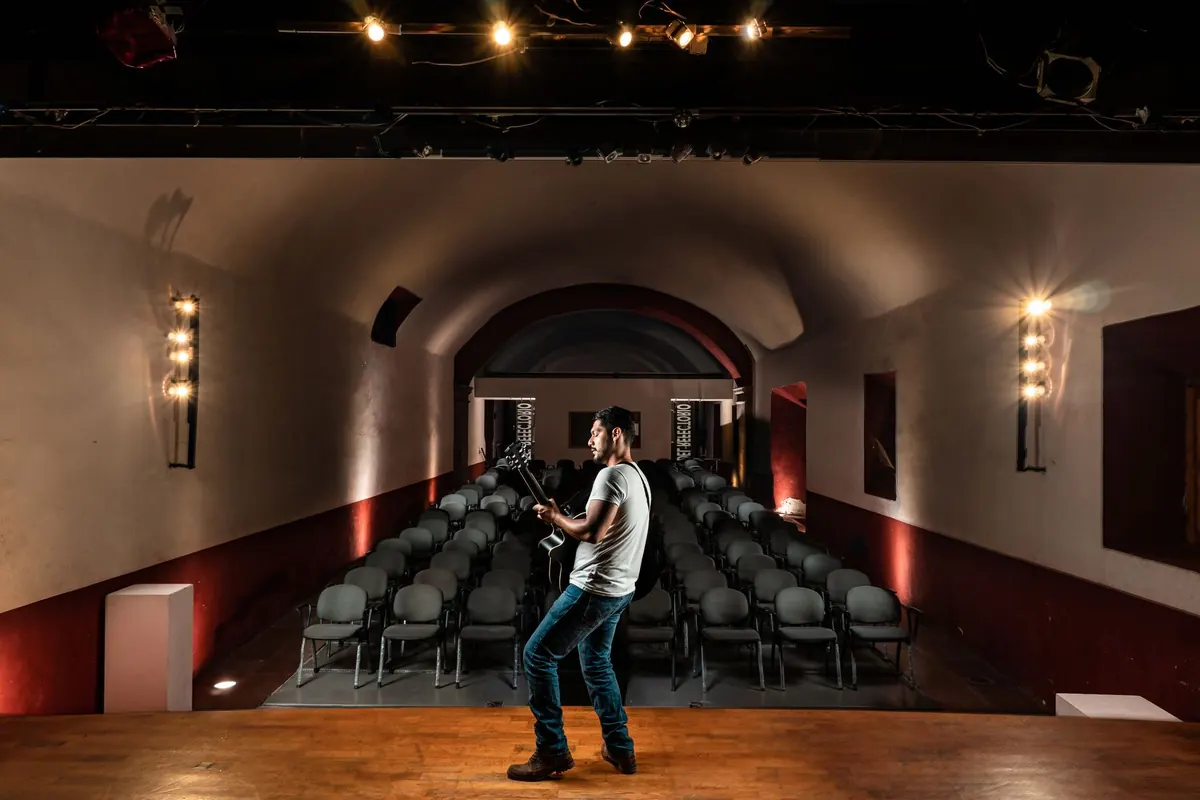
- Consider the house. A 200-seat theatre and a 2,000-seat opera house ask completely different things of a first-timer. Sitting closer in a small venue is often more satisfying than a distant seat in a grand one.
- Check the length honestly. A three-act opera with two intervals is a long evening. If that sounds daunting, a ninety-minute play with no interval is a perfectly good way to start.
Before the Curtain Rises
Preparation is not cheating. For an opera, read a synopsis and learn the names of three characters; you will spend the evening listening instead of catching up. For a musical, glance at the song list so the second act does not ambush you. For a play, go in cold — the writing is the surprise, and reading ahead tends to flatten it.
At the theatre, sit where you can see the surtitles if there are any, and check whether they are above the stage or on small screens at the seats. Buy a programme and read the director's note during the interval; it usually explains the choices that puzzled you in act one. Stay for the curtain call, even if the evening did not fully land.
One last thing. If a form does not move you the first time, that is information rather than failure. Opera and musicals in particular are acquired tastes, and the second evening is usually better than the first, because you spend it watching rather than working out the rules. Take a seat, keep your programme, and let the room tell you what kind of night it is going to be.
Photo: RGY23 / Pixabay

You Might Also Like
A practical guide to Italian audience customs — when to clap at the opera, how to shout bravo correctly, why booing is a tradition, and how to handle the curtain call.
Stalls, balconies and boxes each trade sightlines, comfort, price and atmosphere in different ways. A practical guide to reading a seat map and choosing well for the show you are seeing.