Italian Theater Etiquette: When to Clap, Boo, and Take a Bow
The lights dim, the chatter drops, and somewhere in the dark a hundred programs stop rustling at once. Italian audiences are warm, vocal and quietly strict about rules nobody ever wrote down. Most visitors get it right by instinct. The ones who don't tend to make the same small set of mistakes: clapping at the wrong second, shouting the wrong word, laughing into a silence that was doing its job, or slipping out before the last bow. Here is how the room actually works, from the gallery to the front row.
Two Rooms, Two Rhythms
Italian theatre is not one audience. It is at least two, and they behave differently.
The opera house — La Scala in Milan, La Fenice in Venice, San Carlo in Naples, and the dozens of smaller houses in between — runs on a public, interruptible rhythm. The audience is a participant. It claps mid-evening, comments, requests repeats, and lets a singer know exactly what it thought.
A stage play, the teatro di prosa, runs on the opposite logic. The room goes quiet and gives itself over to the actors. Applause belongs to the end of an act, not to the middle of a scene.
Knowing which room you are sitting in solves most of the confusion before it starts. Everything below follows from that single distinction.
Applause: When the Hands Go
In the Opera House
- Applause after a well-sung aria is standard. The music stops, the audience claps, the conductor waits, then continues. You are not interrupting anything; the pause is built into the evening.
- Applause as the curtain rises on a new production is a genuine Italian habit — the audience claps the set. Yes, the scenery. Join in or don't; nobody will mind either way.
- Calling “bis!” after an aria you loved asks for a repeat. At some houses it happens, at others the request dies politely. Neither outcome is a faux pas.
- Wait for the number to close. Not the scene change, not the middle of a duet — the end of the piece.
At a Play or a Concert
Wait for the end of the act. Not the end of the scene, not the blackout that looks like an ending: the act. In symphonic concerts, hold everything until the whole work is finished. The pause between movements is part of the piece, and clapping there is the classic visitor's error — the conductor's frozen back will tell you so before anyone else does.
With comedy, laughter is welcome and the timing is built for it. Just don't talk over the actors, and please don't finish their lines for them.
Bravo, Brava, and the Grammar of Praise
It is the word everyone knows and half the audience gets wrong. Italian adjectives agree with the person being praised:
- Bravo — one male performer.
- Brava — one female performer.
- Bravi — a group, mixed or all male.
- Brave — a group of women.
Shouting “bravo” at a soprano is the single most common visitor's tell. It is affectionate, and the audience around you will forgive it, and she probably will too. But “brava” lands better, and it costs nothing to get right.
Timing matters as much as grammar. One clear call at the right moment — the end of an aria, the close of a scene, a bow — carries across a whole theatre. A stream of them across the evening doesn't make you generous. It makes you the person everyone is listening to instead of the music.
Two more words worth keeping: bis (again, an encore) and fuori programma, the short extra turn a company gives when the applause refuses to stop. Save “encore” for elsewhere; here it marks you as a guest.
The Boo: A Tradition with Rules
Booing in Italy is not an accident or a loss of control. It is a vocabulary, and it carries different weight depending on who is on the receiving end.
The sounds are specific: a sharp two-fingered whistle, or the low, rolling “buuu” from the back of the throat. In the big opera houses — above all in the gallery, the loggione — a loud reaction to a misguided production or a disappointing voice is part of the culture. The gallery has opinions and shares them in real time. It is public criticism, not personal violence.
Where the line sits:
- Booing a singer in the middle of an aria is rare and harsh.
- Booing at the curtain call is common.
- Booing a director's concept is almost routine in the major houses.
- Booing at a small theatre, a young company, an opening night — don't. A reaction that reads as tradition at La Scala reads as cruelty in a two-hundred-seat room.
If the room stays silent, stay silent with it. Never be the first to boo, and never boo something you have simply never seen before. Taste is not the same thing as judgment.
Curtain Calls and the Long Goodbye
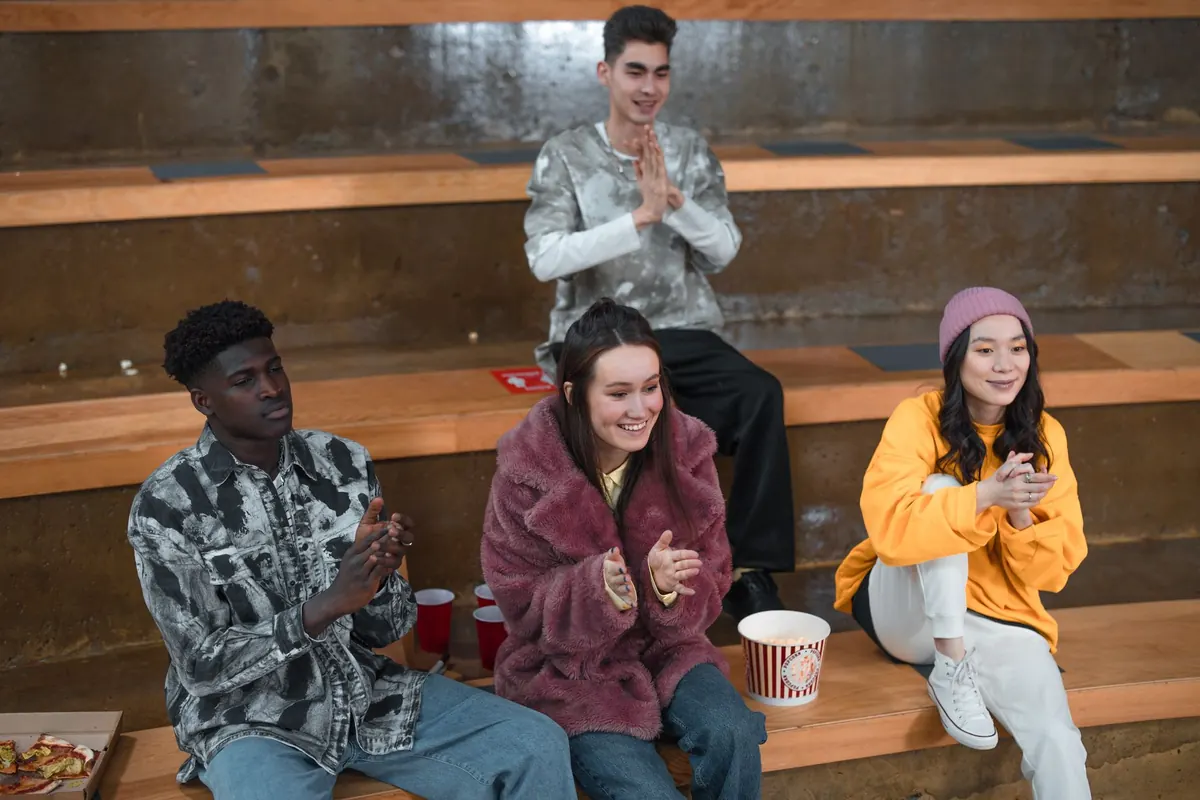
The Italian curtain call is generous and it is long. The audience claps in rhythm, the company comes out once, twice, five times, the lights stay up. A few practical notes:
- Don't stand and reach for your coat at the first bow. The final call — the whole company, often the director — is the one that matters.
- Hold the rhythm. Steady, unison clapping is how an Italian audience asks for more, and it usually works.
- Flowers are tossed from the front rows or handed up at the end. Not obligatory, always appreciated.
- Nobody needs to say “grazie” out loud. Staying to the end says it.
Small Things That Mark You as a Visitor
- Late arrival. Most Italian houses hold you in the foyer until a suitable break, often the interval. Plan to be early rather than exactly on time.
- Phones. Silent, screen dark. Not “just checking the time” — the glow carries further than you think.
- Coats and bags. Use the guardaroba. Seats are tight and a folded coat on your knees annoys the row behind you.
- Programs. Unwrap and unfold before the lights go down, not during the overture.
- Talking. A whisper to your neighbour at the interval is fine. Commentary during the performance is not.
- Dress. Italians dress up more than most Anglo audiences for an evening at the opera — jacket, good shoes — but nobody will turn you away. Wear something you can sit in for three hours without thinking about it.
- No humming, no singing along, no tapping the beat. The person next to you paid for the orchestra, not for you.
A Short Checklist Before the Doors Close
- Work out which room you're in: opera or prose theatre. The rules differ.
- Clap at the end of numbers and acts, never in the middle.
- Get the word right: bravo, brava, bravi, brave.
- Boo only if the room boos first, and only at a curtain call.
- Stay for the last bow and leave with the lights.
- Silence the phone before you sit down.
Do those six things and you'll spend the evening watching the stage rather than the neighbours. Which is the point of the rules in the first place: they exist so that a room full of strangers can hold its breath at the same time. Then the applause breaks, and that sound is what you came for.
Photo: Ron Lach / Pexels
You Might Also Like
Opera, musicals and straight drama share a stage but ask different things of an audience. A practical guide to spotting the differences before you book a ticket.
Stalls, balconies and boxes each trade sightlines, comfort, price and atmosphere in different ways. A practical guide to reading a seat map and choosing well for the show you are seeing.